
Round-robin vs manual lead assignment for sales teams
How to assign leads to sales agents fairly and fast: manual forwarding vs first-come-first-served vs round-robin, and when to use campaign pools.

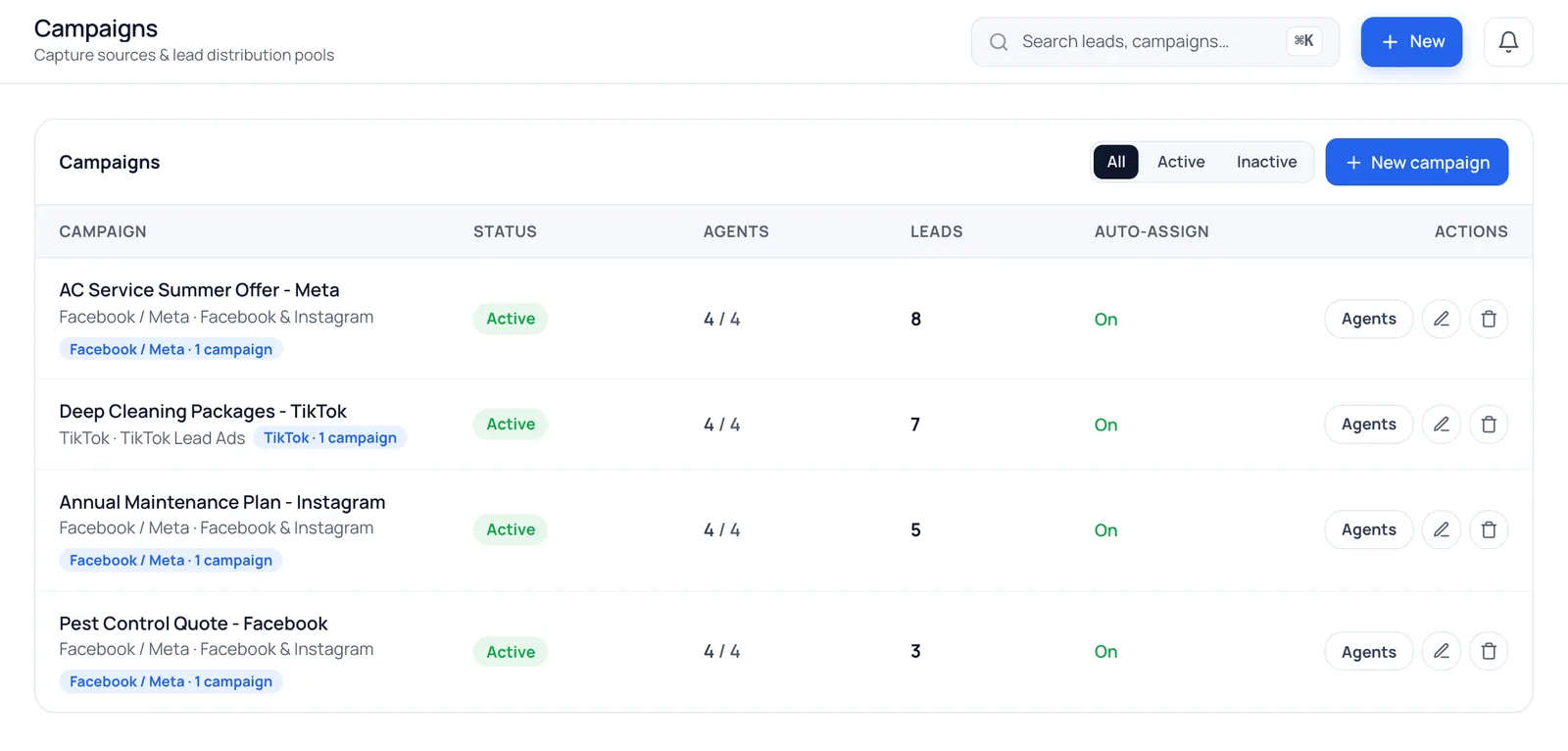
Manual assignment is slow and feels unfair; first-come-first-served rewards whoever watches the phone. Round-robin is fast and fair — and campaign pools let you send each campaign's leads to the right team.
Every sales team has to answer the same question dozens of times a day: who gets this lead? For businesses in Pakistan, the UAE and Saudi Arabia running Facebook, Instagram and TikTok lead ads, from online stores and institutes to clinics and property agencies, the answer usually lives in a WhatsApp group. How you answer it affects how fast leads are contacted, how fairly your team is treated, and how well you can measure performance.
The three common approaches
| Approach | How it works | The problem |
|---|---|---|
| Manual assignment | A manager reads each lead and forwards it to an agent | Slow, and depends on one person being available |
| First come, first served | Leads go into a group; whoever replies first takes it | Rewards whoever watches the phone, not whoever sells best |
| Round-robin | Each new lead goes to the next agent in rotation | Needs a system to do it reliably |
Why manual assignment breaks down
Manual assignment works when you get a handful of leads a day. Once you're running ads, it creates a bottleneck: leads wait until the manager is free, and they pile up on weekends and evenings — when many customers enquire.
It also creates friction. Agents notice when one colleague seems to get the better leads, whether or not it's true.
Why first come, first served is worse than it looks
Dropping leads into a WhatsApp group feels fast, but it has hidden costs:
- The same two or three agents grab most leads, while others disengage.
- Leads get claimed and then forgotten, because nobody tracks follow-up.
- You can't tell whether a lead was lost because it was bad, or because nobody called.
Round-robin: fast and fair
Round robin simply means "taking turns" (in Urdu, baari baari). With round-robin lead assignment, each new lead goes to the next available agent automatically. Nobody has to claim anything, and every agent gets a fair share.
Because every lead has an owner from the first second, you can also measure what happens next — who contacted their leads quickly, and who let them go cold.
When to use campaign pools
Round-robin across your whole team is a good default. But some campaigns need specialists — a premium product, a course run in one city, an overseas-buyer campaign for a property launch, or a team that speaks a particular language. For these, create a pool per campaign: leads from that campaign rotate only among the agents in its pool.
BrokLeads handles this with lead distribution per campaign, including daily and total caps per agent. When the split is by budget, city or language rather than by campaign, routing rules decide first and round-robin is the fallback; our guide to routing leads by budget, city and language shows how to set them up and test them.
How to set up round-robin in your office
- List who takes leads. Mark the agents who are active and taking new leads; leave out managers and anyone on leave.
- Group leads by campaign. One campaign per product, service, course or project lets you give each its own rotation of agents.
- Set caps. A daily cap stops one agent getting buried on a busy day; a total cap is useful for new agents.
- Decide the fallback. Leads that don't come from a campaign, such as new WhatsApp chats or website enquiries, need a pool of agents too.
- Turn on alerts. Every agent should get a push notification on their phone when a lead is assigned.
What to measure once it's running
- Leads received per agent per week, to confirm the rotation is fair.
- Leads never contacted, the clearest sign someone is overloaded or disengaged.
- Overdue follow-ups per agent, which show who is letting warm leads go cold.
- Deals closed per agent, so the fastest responders get recognised.
Round-robin vs weighted distribution
Some CRMs let you "weight" the rotation, sending more leads to top closers. It sounds attractive, but it quickly recreates the favouritism problem, and it hides whether new agents could perform with a fair share. For most sales teams, plain round-robin with caps is simpler and fairer. Reward top closers with better campaigns instead.
A simple rule of thumb
- Start with round-robin across all agents who accept leads.
- Add campaign pools only where a campaign genuinely needs specialists.
- Review each agent's follow-up rate monthly, and adjust who's in each pool.
Fast, fair assignment isn't just good for agents. It's the foundation for replying quickly — and replying quickly is what wins leads. If you're comparing tools, our real estate CRM buyer's checklist covers what to look for.
Related featureLead capture & auto-distribution